

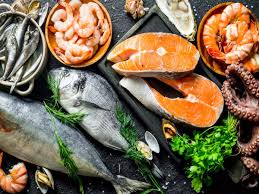
Budget 2026 provides relief to seafood exporters, reducing cost and capital pressures while supporting growth and competitiveness in the export market.
The Union Budget 2026-27, tabled by Finance Minister Nirmala Sitharaman in Parliament on Sunday, strongly focused on uplifting the livestock and marine sector with measures such as strengthening the fisheries value chain, a credit-linked subsidy programme for the animal husbandry sector, and basic duty cuts for raw materials.
The industry welcomed these initiatives as much-needed government support and expects their proper implementation soon. Under the initiatives for increasing farmer incomes, Sitharaman announced that the government will undertake initiatives “for integrated development of 500 reservoirs and Amrit Sarovars and strengthen the fisheries value chain in coastal areas and enable market linkages involving start-ups and women-led groups together with Fish Farmers Producer Organisations”.
She also announced that fish caught by an Indian fishing vessel in the exclusive economic zone (EEZ) or on the high seas will be made free of duty. Landing of such fish at foreign ports will be treated as export of goods, and there will be safeguards in place to prevent misuse during fish catch, transit and transshipment. Divya Kumar Gulati, Chairman, CLFMA (Compound Livestock Feed Manufacturers Association) of India, said that the focus on developing 500 reservoirs and Amrit Sarovars in coastal areas will help strengthen fish availability at the source, and involving women and local groups will bring greater stability and continuity to the supply chain, something the seafood industry has long needed.
“The Budget also gives fresh momentum to fisheries by focusing on sustainability, infrastructure and stronger market linkages. Investments in landing centres, cold chains, and processing will help reduce losses and improve price realisation. The decision to allow duty-free fish catch by Indian vessels in the EEZ and on the high seas, and to treat landings at foreign ports as exports, is a positive step that improves competitiveness and opens up better access to global markets, especially with the US tariff scenario,” he said.
Utham Gowda, Founder of Captain Fresh, said, “The tariff relief measures directly address supply chain economics. Increasing the duty-free import allowance for seafood processing inputs from 1% to 3% of export FOB value provides material relief on cost structures, a critical lever, given the current trade headwinds. More significantly, the move to exempt fish caught in our exclusive economic zone and high seas from duty, while treating foreign port landings as exports, fundamentally reshapes economics for organised, large-scale marine operators.
Pushkar Mukewar, Founder and CEO of trade finance platform Drip Capital, said that the measures will create new avenues to scale operations. “The Budget’s measures to support seafood exports, including increased duty-free input limits, extended export timelines, and duty-free fish catch in the EEZ and on the high seas, will significantly ease cost and working-capital pressures for Indian exporters. These steps create new avenues to scale operations, manage cash flows more predictably, and fully harness the economic value of marine resources,” he said.
For quality employment opportunities in animal husbandry sector in the rural and peri-urban areas, Sitharaman announced support for the animal husbandry sector in entrepreneurship development through a credit-linked subsidy programme, modernisation and scaling up of livestock enterprises, enhancing the creation of livestock, dairy and poultry-focused integrated-value chains and encouraging the creation of livestock farmer producer organisations.Gulati said that the credit-linked subsidy programme and technology modernisation in dairy and poultry directly address long-standing challenges around productivity and efficiency.
By strengthening value chains from accessibility of veterinary professionals to agricultural output and processing, the Budget supports higher efficiency, greater farmer participation in value-added segments and improved availability of milk, eggs and protein-rich foods, highlighting the growing role of allied sectors in India’s journey toward Viksit Bharat,” he said. He added that extending tax deductions for cooperative members supplying cattle feed is another practical measure that helps ease input cost pressures and strengthens the cooperative ecosystem.
News Courtesy:economictimes