
Cellera makes industrial dry forming a reality by enabling scalable fiber tray production for sustainable packaging applications.
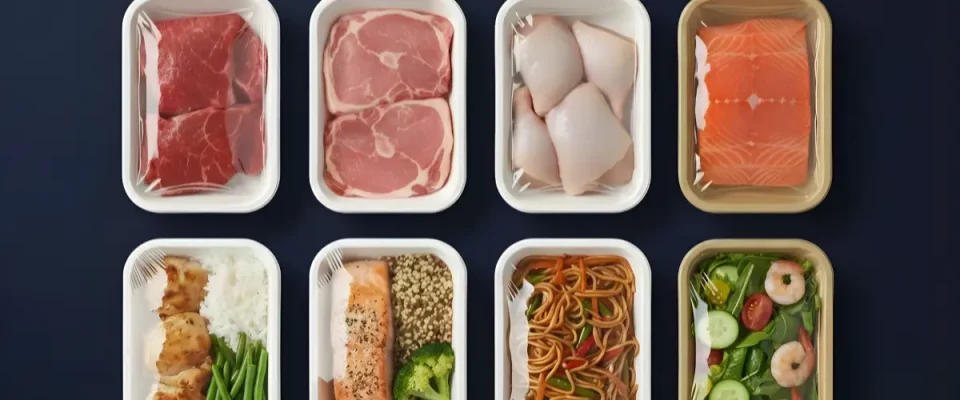
Yangi has introduced a production-ready dry-formed fibre tray designed for meat, fish, deli, and ready-meal applications. The solution combines consistent performance, extended shelf life potential, and premium surface quality while offering greater design flexibility for brands. Manufactured using the company’s Cellera® dry-forming platform, the tray can be produced at industrial scale, enabling packaging producers and converters to adopt a cost-efficient and high-quality fibre alternative.
Positioned as a next-generation fibre packaging option, the tray is engineered to meet functional food-packaging requirements across multiple applications. It has been tested for chilled, frozen, microwave, and oven use, maintaining structural integrity and stability during typical consumer handling. Sealing functionality and compatibility with Modified Atmosphere Packaging (MAP) also support shelf-life needs for protein and ready-meal products.
The tray is made from renewable, responsibly sourced virgin fibres and features a PFAS-free formulation. Functional laminates can be applied selectively depending on performance requirements, with certain material structures designed to work within existing paper recycling systems. Integrated fibre chemistry helps achieve the desired surface and barrier characteristics. The product is available in both bleached and unbleached versions, with customizable sizing options. It also supports debossing, full-surface high-resolution digital printing — including sidewalls — and finishes suitable for labelling.
According to Hanna Rudel, Chief Commercial Officer at Yangi, the tray can be supplied in a standard configuration or tailored to specific barrier, product, and branding requirements, allowing converters and brands to adopt fibre packaging without compromising functionality, appearance, or cost efficiency.
The tray is produced using Cellera®, Yangi’s integrated dry-forming platform, which incorporates dual-drum airlaid formation, in-line custom pad creation, and precision transfer systems to maximize fibre control and material efficiency. By removing the water-intensive wet stage associated with conventional pulp moulding, the process simplifies manufacturing, reduces complexity, and enables rapid cycle times of approximately 4–6 seconds. This results in consistent, high-volume output with tighter tolerances, improved quality consistency, and reduced energy and water consumption. Dry forming represents a significant evolution in fibre packaging production, offering a scalable and design-focused alternative to traditional wet-moulded methods.
Anna Altner, Founder of Yangi, noted that the combination of renewable materials, PFAS-free composition, and an estimated 80% lower carbon footprint compared with plastic alternatives — alongside industrial scalability — positions dry-formed fibre as a new benchmark for packaging producers and brands seeking alternatives to conventional materials.