

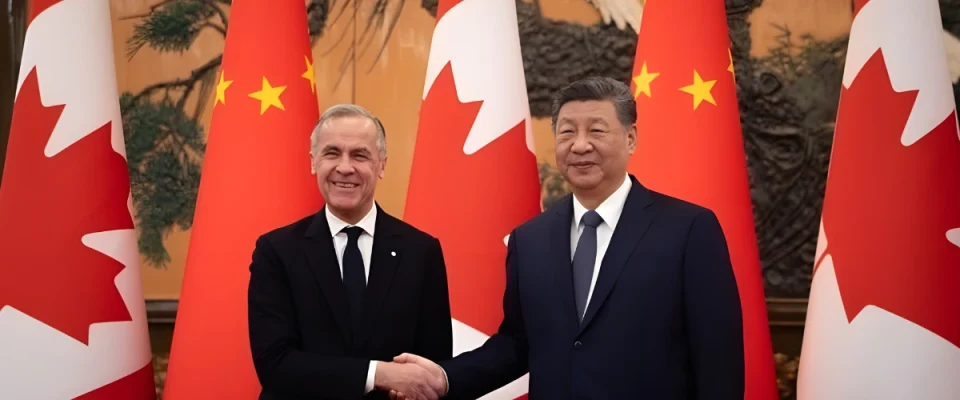
China has suspended and reduced tariffs on several key Canadian agricultural and seafood exports, while Canada has simultaneously eased certain trade restrictions on Chinese electric vehicles as well as select steel and aluminum products.
The measures form part of a broader effort by both countries to stabilise and expand bilateral trade, with Ottawa aiming to increase its exports to China by 50% by 2030 under its wider trade diversification strategy. The move signals a gradual recalibration of economic ties, particularly as Canada seeks to strengthen access to major Asian markets while reducing its reliance on traditional trading partners.
In addition to tariff adjustments, China has reinstated market access for Canadian frozen food from 20 registered meat processing establishments, effective January 15. Prior to the earlier suspension, Canadian frozen food exports to China were valued at approximately $193 million in 2021, highlighting the significance of the Chinese market for Canada’s livestock sector. The resumption of imports is expected to provide renewed opportunities for Canadian meat producers and exporters seeking to regain their presence in one of the world’s largest protein markets.
As part of the reciprocal arrangements, Canada has introduced an annual quota allowing up to 49,000 Chinese electric vehicles to enter the country at the most-favoured-nation tariff rate of 6.1%, replacing the earlier 100% surtax that had effectively limited imports. The policy shift is intended to balance domestic industrial priorities with consumer demand and the broader transition toward electric mobility.
Ottawa has also extended surtax remission measures on certain Chinese steel and aluminum products that are currently in short supply within Canada. The government has expanded these exemptions to include additional steel and derivative products used across key manufacturing and infrastructure sectors, helping ensure supply stability for Canadian industries.
Foreign Affairs Minister Anita Anand stated that the developments reflect Canada’s effort to recalibrate its relationship with China while continuing to advance national economic interests. Industry Minister Mélanie Joly added that the EV quota arrangement aligns with Canada’s broader automotive and advanced manufacturing strategy, supporting the sector’s transformation toward electrification and innovation. The announcement follows Prime Minister Mark Carney’s visit to Beijing earlier this year and forms part of Ottawa’s longer-term objective to double non-U.S. exports over the next decade while building a more diversified global trade network.