

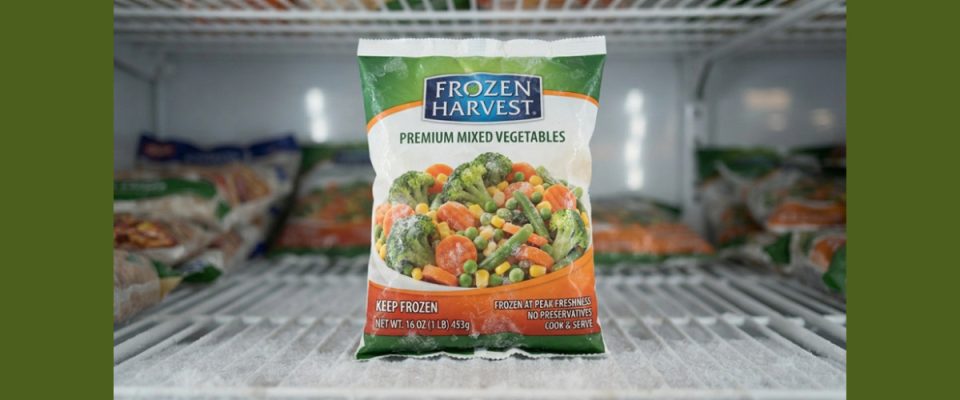
Frozen food packaging has moved far beyond basic containment. It now plays a central role in preserving food quality, extending shelf life, ensuring safety, and supporting efficient global distribution.
As frozen foods become a staple across households, foodservice chains, and institutional buyers, packaging has emerged as a critical value enabler rather than a supporting function.
According to Research Intelo, the global frozen food packaging market was valued at USD 48.7 billion in 2024 and is projected to reach USD 75.2 billion by 2033, expanding at a compound CAGR of 5.0% during the forecast period. This steady expansion reflects the rising global demand for frozen foods and the increasing reliance on advanced packaging solutions to support cold-chain efficiency and product integrity.
Rising urbanization, changing dietary habits, and the growing preference for ready-to-cook and ready-to-eat food products continue to accelerate frozen food consumption, reinforcing the importance of reliable, scalable, and high-performance packaging systems.
What Functions Does Frozen Food Packaging Serve Beyond Preservation?
Frozen food packaging is designed to perform multiple functions simultaneously. Protection against moisture, oxygen, freezer burn, and microbial contamination remains essential. In addition, packaging must withstand mechanical stress during transportation, handling, and extended periods of frozen storage.
Beyond physical protection, packaging increasingly supports branding, product differentiation, and regulatory compliance. Clear labeling, nutritional transparency, allergen declarations, and traceability features have become standard requirements across many markets. Packaging also serves as a communication medium, providing cooking instructions, storage guidance, and sustainability information that enhances consumer confidence and product usability.
Which Materials Dominate the Frozen Food Packaging Landscape?
Plastic remains the most widely used material in frozen food packaging due to its versatility, cost-effectiveness, and superior barrier properties. Commonly used plastics include polyethylene (PE), polypropylene (PP), and polyethylene terephthalate (PET). These materials are widely adopted across multiple packaging formats, offering lightweight solutions that ensure product safety, durability, and extended shelf life.
Paper and paperboard continue to gain traction, particularly for secondary packaging and outer cartons. Coated and laminated paper-based solutions provide improved resistance to moisture and temperature fluctuations while supporting recyclability and sustainability goals.
Metal packaging, including aluminum trays and containers, maintains relevance in applications requiring high thermal resistance, such as oven-ready frozen meals. Glass packaging, while used selectively, remains popular for premium frozen desserts and specialty food products due to its inert nature and premium appearance.
How Are Packaging Formats Evolving in the Frozen Food Segment?
Flexible packaging, encompassing pouches, bags, and wraps, has experienced significant innovation in recent years. Advances in film technology and barrier performance have enabled the development of multi-layer flexible films that offer enhanced protection against moisture, oxygen, and light, helping to preserve texture, flavor, and nutritional value.
Rigid packaging formats, including containers, trays, and boxes, have traditionally dominated certain frozen food categories due to their superior protection against physical damage and ease of stacking during transportation and storage. These formats remain essential for frozen meals, bakery items, and ice cream products.
Hybrid packaging solutions that combine rigid bases with flexible lids are gaining increasing attention. These designs balance structural integrity with material reduction, supporting both performance efficiency and sustainability objectives.
What Role Does Sustainability Play in Frozen Food Packaging Decisions?
Sustainability has become a defining factor in frozen food packaging innovation. Food manufacturers and packaging suppliers face mounting pressure to reduce plastic waste, improve recyclability, and lower overall carbon footprints across the packaging lifecycle.
Key initiatives include the development of mono-material packaging structures, bio-based plastics, recyclable laminates, and downgauged packaging designs that use less material without compromising performance. Paper-based alternatives and compostable materials are also being explored, although maintaining functionality under freezing conditions remains a technical challenge.
Regulatory frameworks, extended producer responsibility (EPR) policies, and corporate sustainability commitments are accelerating the adoption of environmentally responsible packaging solutions while maintaining stringent food safety standards.
How Do Technological Advancements Influence Packaging Performance?
Advances in material science and packaging technology are reshaping frozen food packaging capabilities. High-barrier films, advanced surface coatings, and multilayer structures enhance resistance to oxygen and moisture ingress, supporting longer shelf life and improved food quality.
Smart packaging features, such as temperature indicators, QR codes, and traceability tags, are increasingly being integrated to enhance supply chain transparency and food safety monitoring. Automation in packaging lines has also improved sealing accuracy, reduced material waste, and increased production efficiency, enabling manufacturers to scale operations in line with rising global demand.
Which End-use Segments Drive Market Demand?
The retail segment accounts for the largest share of the frozen food packaging market. Growth is driven by the proliferation of supermarkets, hypermarkets, and convenience stores offering an extensive variety of frozen food products. Retailers prioritize packaging solutions that enhance shelf appeal, provide clear product information, and ensure compliance with food safety and sustainability regulations.
The foodservice segment, encompassing restaurants, quick-service outlets, and catering services, is experiencing rapid expansion. Increased reliance on frozen ingredients and prepared meals has intensified demand for bulk packaging, portion-controlled formats, and packaging solutions that support efficient storage and handling.
The expansion of online grocery and food delivery platforms has further boosted demand for packaging that maintains product quality during transit, offers tamper evidence, and supports last-mile delivery efficiency.
How Does Regional Demand Shape Packaging Requirements?
- North America holds the largest share of the global frozen food packaging market, accounting for approximately 35% of total market value in 2024. This dominance is supported by a well-established cold chain infrastructure, high awareness of food safety standards, and a mature retail environment. The region has also seen early adoption of advanced packaging technologies, including vacuum sealing and modified atmosphere packaging.
- Asia Pacific region is projected to be the fastest-growing market, with an anticipated CAGR of 2% from 2024 to 2033. Growth is driven by rapid urbanization, rising disposable incomes, and expanding middle-class populations in countries such as China, India, and Southeast Asian nations. The rapid expansion of modern retail and online grocery platforms has significantly increased access to frozen food products.
- Emerging economies in Latin America and the Middle East & Africa are witnessing steady growth from a lower base. Market expansion in these regions is supported by the increasing penetration of organized retail, gradual improvements in cold chain infrastructure, and changing dietary preferences that favor longer-lasting food products.
What Challenges Affect the Frozen Food Packaging Market?
Despite strong growth prospects, the frozen food packaging market faces several challenges. Regulatory uncertainty, particularly related to plastic usage, labeling requirements, and recycling mandates, can increase compliance costs and create barriers for market participants.
Raw material price volatility, especially for plastics and specialty films, continues to impact production costs and profit margins. In addition, the lack of harmonized packaging standards across regions complicates cross-border trade and slows the adoption of innovative packaging technologies.
Addressing these challenges will require sustained investment in research and development, closer collaboration across the value chain, and proactive engagement with regulatory bodies and industry associations.
What Does the Future Hold for Frozen Food Packaging?
The frozen food packaging market is expected to evolve in response to shifting consumption patterns, technological advancements, and evolving regulatory landscapes. Innovation is likely to focus on recyclable and low-impact materials, improved barrier performance, and packaging designs that align with circular economy principles.
Customization, smart packaging features, and lightweight solutions are expected to gain prominence as manufacturers and brands seek differentiation, operational efficiency, and sustainability alignment. As frozen foods continue to integrate into everyday diets worldwide, packaging will remain a critical enabler of quality, safety, and market competitiveness.
Conclusion: Why Is Frozen Food Packaging a Cornerstone of the Modern Food Industry?
Frozen food packaging stands at the intersection of food preservation, logistics efficiency, and sustainability. Its role extends beyond protection to encompass branding, regulatory compliance, and environmental responsibility. As the global frozen food packaging market grows from USD 48.7 billion in 2024 to USD 75.2 billion by 2033, packaging solutions will continue to shape product success, supply chain resilience, and long-term industry growth.
Which packaging innovations are likely to define the next phase of growth in the frozen food ecosystem?
Author : Mandar Shewale is a Marketing Specialist at Research Intelo with experience in digital marketing, SEO, content planning, and market research communications. He works on content development, search optimization, and marketing coordination across research-focused projects. His work involves supporting online visibility initiatives and maintaining content quality across digital platforms.