

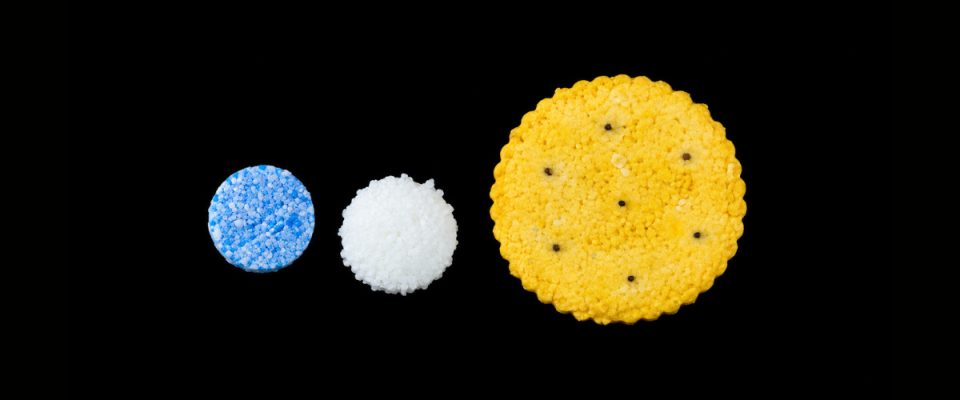
Researchers in Brazil have developed a biodegradable starch-based sensor that changes color in response to moisture, offering a potential visual method for monitoring food quality inside packaging.
Researchers at the São Carlos Institute of Chemistry at the University of São Paulo (IQSC-USP) have developed a starch-based sensor that changes color when exposed to moisture inside food packaging. The technology could allow manufacturers and consumers to visually monitor changes in food quality without requiring complex measurement equipment.
The biodegradable sensor was developed using a highly porous starch-based cryogel combined with cobalt chloride. When the material is dry, it appears blue, while exposure to water vapour causes it to shift toward pink. The color change occurs because cobalt chloride undergoes hydration when it absorbs moisture.
Researchers initially tested the sensor with cream crackers, a product that can quickly lose its crispness when exposed to unsuitable humidity conditions. The study found that changes in the sensor’s color corresponded with increased moisture and were strongly associated with changes in the crackers’ texture.
The sensor can respond within seconds, allowing moisture changes inside packaging to be observed directly. The researchers also suggest that the color could potentially be interpreted using a smartphone camera, providing a simple approach for monitoring packaging conditions.
The technology is based on a cryogel structure. Researchers freeze the starch gel and then use freeze-drying to remove the water through sublimation. This process preserves the porous structure of the material, giving it a large surface area that can interact with moisture in the surrounding environment.
The research could have applications in food packaging where moisture control is important for maintaining product texture and quality. Products such as crackers and other moisture-sensitive foods could potentially benefit from visual indicators that provide information about storage conditions.
However, the technology is still at the research stage. The presence of cobalt chloride currently prevents the sensor from coming into direct contact with food because of its toxicity. Commercial applications would therefore require packaging redesign and further development of safer sensor materials.
The research team is investigating alternative materials, including natural compounds obtained from fruit sources such as jabuticaba peel. These natural pigments can respond to changes in pH and may provide opportunities for developing color-changing indicators for monitoring food spoilage.
The researchers are particularly interested in extending the concept beyond moisture monitoring. Future versions could potentially be developed to detect changes associated with the spoilage of products such as meat, while natural bioactive compounds could also provide additional functionality.
The findings were published in Food Chemistry in June 2026 under the title “Starch-based cryogels incorporating cobalt chloride as colorimetric moisture sensors for food packaging.” The work was supported by the São Paulo Research Foundation (FAPESP).
The development highlights the growing interest in smart and active packaging technologies that can provide information about food conditions directly through visible indicators. Further research into safer materials could determine whether starch-based colorimetric sensors can eventually move from laboratory research toward commercial food-packaging applications.