
The UAE announced a new policy in May 2026 to replace about US$545 million (AED 2 billion) in food imports each year, supporting up to 200 food factories and targeting a 15-30% increase in local production capacity.
To diversify their economies, Gulf countries are deliberately building a broader industrial base. Automated food production solutions are vital to help local businesses meet the target and supply health conscious consumers worldwide who are looking for pleasurable flavors and convenience.
A Rapidly Growing Local Food Industry: Halal Food and the Islamic Economy For decades, oil and gas revenues powered the economies of the Gulf; today, the Gulf Cooperation Council (GCC) countries show strength in the region’s food automation industry.
According to the State of the Global Islamic Economy Report 2025/26, halal food remains the largest consumer sector of the Islamic economy, with spending of US$1.53 trillion in 2024, projected to reach US$2.06 trillion by 2029.
The same report ranked the UAE second worldwide in the Global Islamic Economy Indicator, moving up from fourth place in both 2024 and 2023. Malaysia retained the top position, while Saudi Arabia, Indonesia, and Bahrain followed in third through fifth place.
As geopolitics reshapes brand loyalty, with shoppers turning to homegrown labels they see as culturally and ethically aligned, the region’s Gen Z also values health-conscious producers and looks for convenience to sustain a busy, fast-paced lifestyle.
That demand is driving a new wave of food manufacturing across GCC countries. The expansion of food processing, beverage production, and packaged food manufacturing is expected to support increasing industrial demand for frozen food.
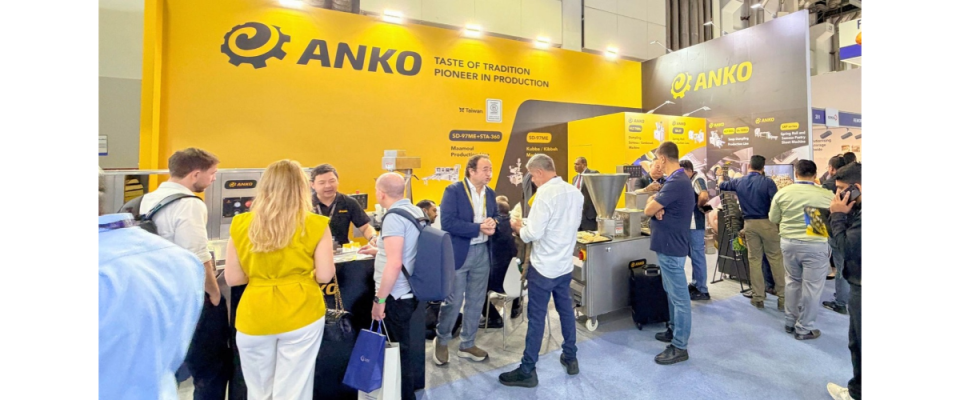
Mid-Sized Businesses Stay Competitive as AI and Food Innovation Become More Intuitive This year’s Gulfood Manufacturing Exhibition, showcasing the progress of the food industry, opened its doors under the theme “Powering Food Security Through Manufacturing Innovation.” AI process control, predictive maintenance, and robotics are helping manufacturers shift from reactive fixes to real-time production management.
Al Hazmi Group International, Jebbeh Group, and Tesan, some of the leading solution providers in the region, showcased two standout food automation solutions for businesses of all sizes, highlighting their versatility and ease of use and promising output of 3,000 to 12,000 pieces every hour.
“ANKO’s HLT-700U Multipurpose Filling and Forming Machine brings 700 different mold options for food makers, while the SD-97 Series Automatic Encrusting and Forming Machine can make more than 60 different food products. Our clients are using ANKO Food Machine to make foods like kibbeh, maamoul, spring rolls, falafel, and pies,” said Richard Ouyang, ANKO’s General Manager.
“Automation makes the job easier and more enjoyable for kitchen staff, improves their quality of life, and has been proven to reduce costs, helping businesses stay competitive in their sector.”
Global Leader in Food Production Solutions : ANKO Food Machine is a Taiwanese food machinery manufacturer with 48 years in the market, exporting to 114 countries and providing product customization and food-grade equipment, with regular maintenance support in the Gulf region.