

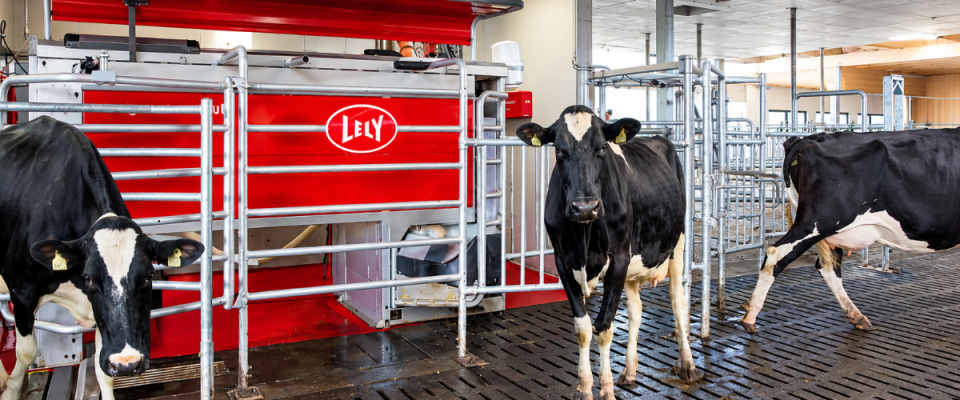
A Southland dairy operation is combining automated milking, animal monitoring and pasture grazing to improve farm efficiency and support cow welfare.
A dairy farm in Dacre, near Invercargill on New Zealand’s South Island, is demonstrating how robotic technology can be integrated with a traditional pasture-based farming system. Run by Bruce Dinnington, the operation manages around 350 cows and combines a freestall wintering barn with automated equipment and seasonal grazing.
The farm uses six Lely Astronaut A4 milking robots, four Lely Discovery manure collection units, a Lely Calm automated calf feeder and a Lely Juno feed pusher. The move toward automation initially began with calf feeding, where Dinnington observed that calves could move freely and feed according to their own schedule. This experience encouraged him to explore robotic milking for the adult herd.
The farm’s 360-bed freestall barn is primarily used during winter, providing shelter and helping protect pasture and soil from wet conditions. During summer, the cows graze outdoors, while in autumn they spend the day on pasture before returning to the barn at night for supplementary feed. The grazing area is divided into four blocks, allowing cows to move between fresh pasture and the barn where they can access the robotic milking system voluntarily.
The robotic system also provides detailed information about individual cows. During each milking, the robots record measurements including individual quarter readings, milk temperature and somatic cell count. Dinnington uses this information to identify potential mastitis issues earlier than was possible with the farm’s previous rotary milking system.
The robots also include weighing systems that monitor changes in cow body weight. An alert is sent to Dinnington’s phone if a cow loses more than 7% of her weight over three days. According to Dinnington, these changes can help identify potential problems such as lameness or illness at an earlier stage, providing a broader view of animal health beyond conventional udder checks.
The transition to automation has also changed the farm’s labour requirements. Dinnington said the operation became a family-run business after outside staff were no longer required, resulting in annual savings of about NZ$150,000 in labour and housing costs. Milk-solids production increased from 560 to 750 kilograms per cow, while the herd moved to an 18-month calving interval designed to extend peak lactation and support longer cow lifespans.
The investment in robotics was estimated to have a five-year payback period. The farm’s experience highlights how automated milking can be combined with New Zealand’s pasture-based dairy model rather than replacing outdoor grazing. DairyNZ also notes that automatic milking systems can operate within pastoral systems when cow movement and pasture allocation are carefully managed.