

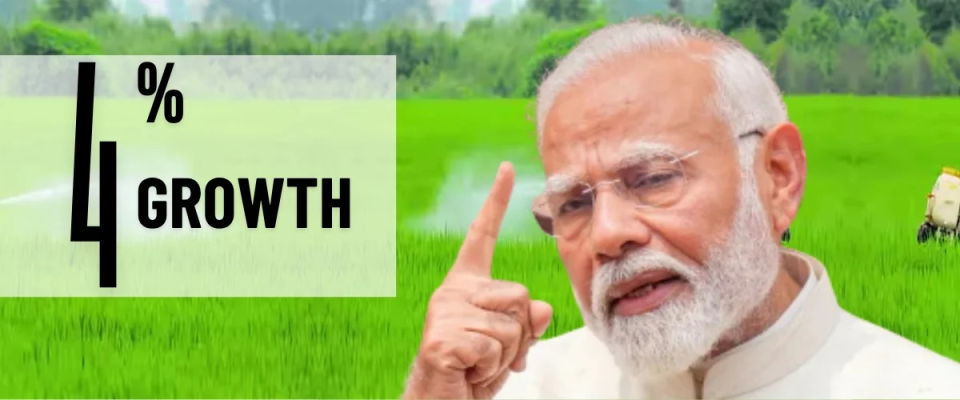
Prime Minister Narendra Modi highlights agricultural expansion, rising dairy and fisheries production, farm exports and technology adoption at the Kisan Tak Bharat Agriculture Conference.
India’s agriculture sector has recorded average annual growth of more than 4% over the past decade, marking the first time since Independence that the sector has achieved this level of sustained growth, Prime Minister Narendra Modi said on November 12, 2026. Speaking at the Kisan Tak Bharat Agriculture Conference organised by the India Today Group in New Delhi, he highlighted the sector’s contribution to rural development, employment and the country’s economic progress.
The Prime Minister said India’s agricultural exports have crossed ₹4 lakh crore annually, reflecting the country’s expanding production capacity and presence in international markets. He also highlighted India’s position as a major global producer of milk, pulses, rice, wheat, cotton, fruits, vegetables, fish and millets. According to his remarks, milk production has increased by 70% over the past decade, egg production by 90%, while fish production has more than doubled.
Growth in allied agricultural activities has also contributed to the sector’s expansion. Honey production has increased from approximately 80,000 tonnes to 1.5 lakh tonnes, while horticulture output has risen from around 280 million tonnes to more than 350 million tonnes. These developments highlight the growing contribution of dairy, poultry, fisheries, beekeeping and horticulture to agricultural diversification and rural income generation.
Modi also highlighted government support for agricultural inputs and infrastructure. He said approximately ₹16 lakh crore had been spent on fertiliser support over the past 12 years to maintain affordability for farmers. Under the PM-KUSUM scheme, around 12 lakh solar pumps have been provided, helping farmers reduce electricity expenses and explore opportunities to generate additional income through renewable energy.
Agricultural research and extension infrastructure have expanded during this period, according to the Prime Minister. The number of soil testing laboratories has increased to more than 8,400, compared with only a small number in 2014, while the country now has over 7,500 Krishi Vigyan Kendras. He also referred to the establishment of 10,000 Farmer Producer Organisations (FPOs), which can help farmers strengthen collective operations and gain access to food processing technologies and markets.
The Prime Minister called for greater crop diversification, encouraging farmers to explore opportunities beyond traditional crops such as wheat, rice and sugarcane. He also urged agricultural equipment manufacturers and start-ups to develop solar-powered machinery and technologies that can improve farm productivity while reducing operating costs.
Natural farming was another key area highlighted during the conference. Modi called for reducing excessive dependence on chemical fertilisers and pesticides and encouraged wider adoption of natural farming practices. He also stressed the importance of improving soil health and making farming more sustainable over the long term.
The growth figures also align with the Economic Survey 2025–26, which reported average annual growth of 4.4% in the agriculture and allied sector over the preceding five years. It recorded a decadal growth rate of 4.45% between FY2015–16 and FY2024–25, supported particularly by livestock, fisheries and aquaculture, alongside crop production.
The developments point to the increasing importance of allied activities, technology adoption, food processing and market diversification in India’s agricultural economy. Continued investment in infrastructure, innovation and sustainable farming practices will remain important for improving productivity, strengthening rural livelihoods and expanding opportunities across the agricultural value chain.