

Introduction
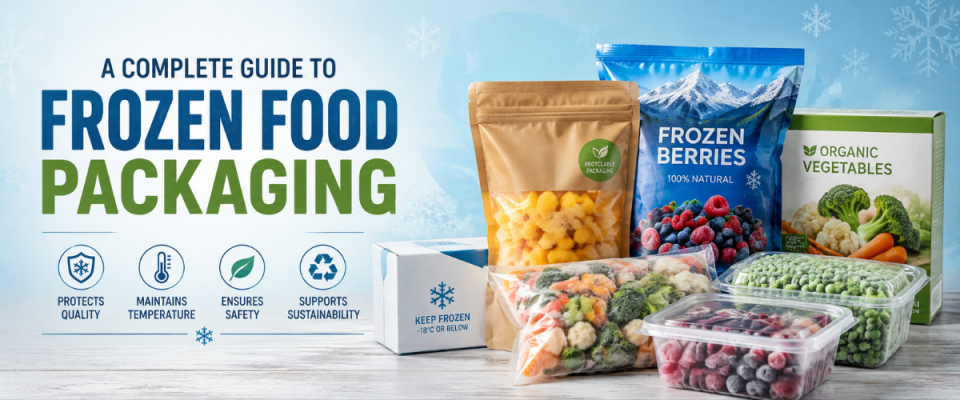
Frozen food packaging plays a vital role in maintaining the quality, safety, and freshness of food products throughout storage and transportation. As consumer demand for convenient frozen meals, seafood, vegetables, dairy products, and ready-to-cook foods continues to grow, selecting the right packaging has become more important than ever.
Effective frozen food packaging not only protects products from moisture, oxygen, contamination, and temperature fluctuations but also extends shelf life, improves logistics, and strengthens brand identity. This guide explores the importance of frozen food packaging, the most commonly used packaging materials, and how businesses can choose the right solution for their products.
Why Frozen Food Packaging Matters
Proper packaging is essential for preserving the quality of frozen food from production to consumption. It serves multiple purposes beyond simply containing the product.
1. Ensures Food Safety
Frozen foods require controlled storage conditions to prevent contamination and maintain freshness. Packaging acts as a protective barrier against external factors such as air, moisture, dust, microorganisms, and light.
High-quality packaging minimizes the risk of freezer burn, prevents unwanted odors from entering the food, and reduces the chances of spoilage during storage and transportation. By maintaining product integrity, suitable packaging also helps lower the risk of foodborne illnesses caused by contamination.
2. Extends Shelf Life
Different frozen foods have different storage requirements depending on their ingredients and preservation methods.
Products containing stabilizers or preservatives may tolerate slight temperature variations, while highly perishable items such as seafood and fresh meat require continuous storage at approximately 0°F (-18°C) or below.
Packaging materials with strong moisture and oxygen barriers help slow quality deterioration, preserve texture, maintain flavor, and reduce freezer burn, allowing frozen foods to remain fresh for longer periods.
3. Supports Branding and Marketing
Packaging serves as the first point of interaction between a product and the consumer. Attractive designs, clear product information, and high-quality printing help create a strong brand identity.
Modern frozen food packaging often incorporates vibrant graphics, nutritional information, sustainability messaging, and easy-to-read labels that build consumer confidence and encourage repeat purchases.
Well-designed packaging also helps products stand out in crowded freezer displays, increasing their visibility and market appeal.
4. Improves Storage and Transportation
Efficient packaging contributes significantly to logistics and supply chain management.
Standardized package sizes make stacking, palletizing, and warehouse storage more efficient. Durable packaging also protects products from physical damage during loading, unloading, and transportation while maximizing the use of storage space and reducing shipping costs.
Common Packaging Materials for Frozen Foods
A variety of materials are used depending on the type of food, required shelf life, transportation conditions, and branding requirements.
1. Plastic Films
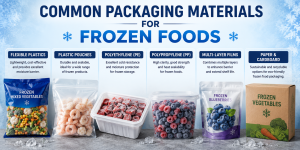
Plastic films are among the most widely used materials in frozen food packaging due to their flexibility, lightweight nature, and excellent sealing properties.
Common plastic film materials include:
- Low-Density Polyethylene (LDPE)
- Linear Low-Density Polyethylene (LLDPE)
- Polyethylene Terephthalate (PET)
- Biaxially Oriented Polypropylene (BOPP)
- High-barrier coated films
These films protect products from moisture loss while helping maintain freshness throughout frozen storage.
2. Flexible Plastic Pouches
Flexible pouches provide an economical and convenient packaging solution for many frozen food products.
Manufactured from combinations of polyethylene, polypropylene, nylon, and multilayer laminates, these pouches offer excellent protection against moisture, oxygen, and contaminants.
Their lightweight construction reduces transportation costs while providing excellent shelf presentation. Flexible pouches are commonly used for frozen vegetables, fruits, seafood, meat products, and ready-to-cook meals.
3. Paperboard and Cardboard Packaging
Paperboard and cardboard cartons are extensively used as secondary packaging for frozen foods.
These materials provide structural strength, making products easier to stack, transport, and display. They also offer a large printable surface for branding, nutritional information, cooking instructions, and promotional graphics.
Paperboard cartons are commonly used for frozen pizzas, fish fingers, ice cream tubs, and family-sized frozen meals.
4. Aluminum Foil
Aluminum foil provides one of the best barriers against oxygen, moisture, light, and contaminants.
Although more expensive than plastic packaging, foil effectively protects food quality, prevents freezer burn, and extends product shelf life.
Foil laminates are widely used for premium frozen meals, seafood products, and foods requiring long-term storage.
5. Expanded Polystyrene (EPS) Foam
Expanded Polystyrene (EPS) foam is valued for its excellent insulation properties.
Its closed-cell structure contains approximately 98% air, making it lightweight while providing outstanding thermal insulation. EPS is also highly resistant to moisture absorption, making it ideal for transporting temperature-sensitive frozen products.
The material is commonly used for seafood, meat, and frozen food shipments requiring extended temperature control.
6. Rigid Plastic Containers
Rigid plastic containers combine durability with versatility, making them suitable for a wide range of frozen food applications.
These containers resist impacts during transportation, protect products from crushing, and allow convenient reheating in many cases.
They are widely used for:
- Frozen ready meals
- Ice cream
- Frozen desserts
- Meat products
- Seafood
- Prepared foods
Their strength and reusability also make them an attractive packaging option for consumers.
Comparison of Common Frozen Food Packaging Materials
| Material | Key Characteristics | Low-Temperature Performance | Advantages | Limitations | Typical Applications |
|---|---|---|---|---|---|
| PET (Polyethylene Terephthalate) | High clarity, rigid, excellent print quality | Good | Premium appearance, strong barrier properties | Can become brittle at extremely low temperatures | Ice cream, premium frozen meals |
| LDPE / LLDPE | Flexible, durable, excellent heat sealing | Excellent | Low cost, puncture resistant, crack resistant | Moderate oxygen barrier | Frozen vegetables, meats, bulk foods |
| BOPP (Biaxially Oriented Polypropylene) | Clear, moisture resistant, stiff | Good | Attractive printing, improved moisture protection | Lower puncture resistance | French fries, nuggets, snack foods |
| Coated Paperboard | Strong structure, printable, recyclable | Good | Easy stacking, excellent branding | Requires moisture-resistant coating | Pizza cartons, fish sticks, frozen desserts |
| Aluminum Foil Laminates | Complete barrier against oxygen, moisture, and light | Excellent | Maximum shelf-life protection | Higher material cost | Seafood, premium ready meals |
| EPS Foam | Lightweight, highly insulating | Excellent | Superior temperature control | Bulky and less environmentally friendly | Seafood transport, cold-chain shipping |
| Rigid Plastic Containers | Durable and reusable | Excellent | Impact resistant, versatile | Higher material usage | Ready meals, frozen desserts, proteins |
Choosing the Right Frozen Food Packaging
Selecting the ideal packaging depends on several important factors, including:
- Type of frozen food
- Required shelf life
- Storage temperature
- Transportation distance
- Moisture and oxygen barrier requirements
- Consumer convenience
- Sustainability goals
- Branding and retail presentation
- Production and packaging costs
Many manufacturers combine multiple materials into multilayer packaging structures to achieve optimal protection while maintaining attractive product presentation.
Conclusion
Frozen food packaging is far more than a protective covering—it is an essential component of food preservation, product quality, and supply chain efficiency. The right packaging safeguards frozen foods against moisture, oxygen, contamination, and temperature fluctuations while extending shelf life and maintaining freshness. Materials such as plastic films, flexible pouches, paperboard, aluminum foil, EPS foam, and rigid plastic containers each offer unique advantages for different applications. By selecting packaging based on product characteristics, storage conditions, transportation requirements, and branding objectives, food manufacturers can improve product safety, reduce waste, enhance customer satisfaction, and strengthen their position in the increasingly competitive frozen food market.