

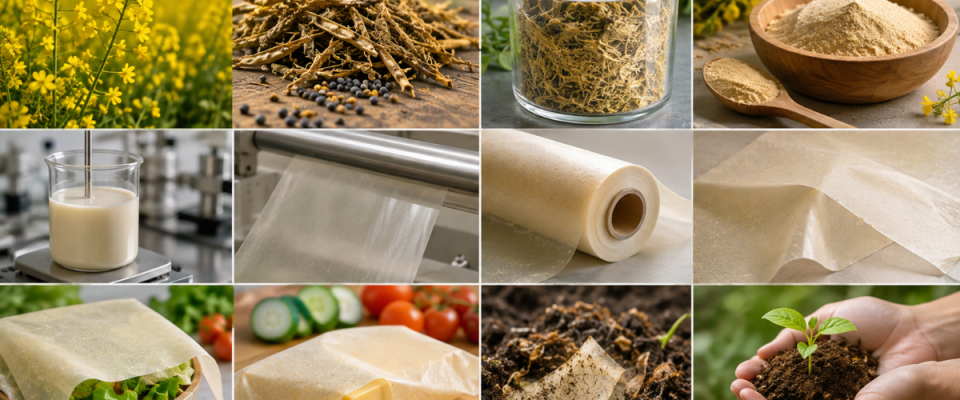
Innovative bio-based packaging solution converts agricultural by-products into sustainable alternatives to conventional plastic films
Researchers and innovators are exploring rapeseed processing waste as a promising raw material for developing biodegradable food packaging, creating new opportunities to replace conventional plastic wraps with environmentally friendly alternatives. The approach supports circular economy goals by converting agricultural residues into valuable packaging materials.
Rapeseed, widely used for oil production, generates large amounts of by-products such as rapeseed meal and cake. Instead of being treated as waste, these residues contain valuable compounds including proteins, fibres and bioactive materials that can be utilised in sustainable packaging applications.
The newly developed packaging concept uses rapeseed-derived components to create biodegradable films with improved functional properties. Studies have shown that rapeseed-based materials can enhance packaging performance by providing antioxidant activity, antimicrobial properties and better barrier characteristics, helping protect food quality and extend shelf life.
The innovation represents a shift towards agricultural waste-based packaging, where discarded biomass is converted into high-value materials for the food industry. Such solutions can reduce dependence on petroleum-based plastics while supporting more sustainable resource management across the packaging supply chain.
Biodegradable food wraps made from plant-based materials are gaining attention as food brands and manufacturers seek alternatives that reduce plastic waste without compromising product protection. Researchers are exploring various renewable sources, including agricultural residues, plant fibres and natural polymers, to develop next-generation packaging solutions.
For the food packaging sector, rapeseed-based materials could create new possibilities for sustainable films, coatings and protective packaging formats. The technology aligns with increasing demand for circular packaging solutions that combine environmental benefits with functional performance.
As regulations and consumer preferences continue driving the transition towards sustainable packaging, innovations using agricultural waste could play an important role in building a more resource-efficient and low-impact packaging industry.