

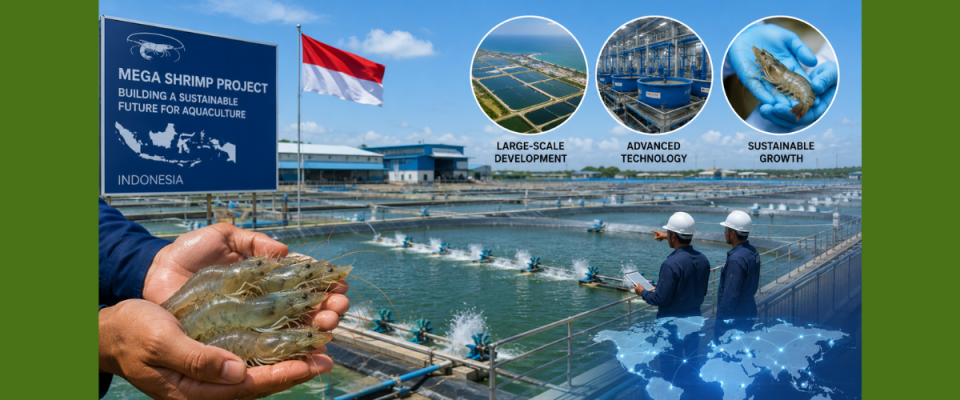
Indonesia’s decision to develop a mega shrimp production project capable of generating nearly 7,000 jobs is more than an investment in aquaculture—it is a strategic move to strengthen the country’s position in the rapidly evolving global seafood industry.
As demand for high-quality, responsibly farmed shrimp continues to rise, producing nations are increasingly investing in large-scale, technology-driven aquaculture to secure long-term export growth and food security.
For Indonesia, the project represents an opportunity to transform its vast coastal resources into a globally competitive production ecosystem. Beyond expanding shrimp farming acreage, the initiative is expected to integrate hatcheries, feed production, processing facilities, cold-chain logistics, quality assurance systems, and export infrastructure into a more efficient value chain. Such integration is becoming essential as international buyers place greater emphasis on product traceability, sustainability, and consistent quality.
The global shrimp industry has witnessed significant shifts over the past decade. Disease outbreaks, rising production costs, climate-related challenges, and changing consumer preferences have prompted producers to modernize farming practices and adopt advanced technologies. Indonesia’s latest initiative reflects this transition, with greater emphasis on biosecurity, water management, automation, and environmentally responsible aquaculture practices.
Employment generation is another key outcome of the project. The creation of around 7,000 direct and indirect jobs is expected to stimulate economic activity in coastal regions while supporting ancillary industries ranging from feed manufacturing and equipment supply to processing, packaging, logistics, and export services. Such developments have the potential to strengthen local economies while enhancing the resilience of Indonesia’s seafood supply chain.
From a global perspective, the investment also intensifies competition among the world’s leading shrimp-exporting nations. Ecuador, India, Vietnam, Thailand, and Indonesia are all pursuing capacity expansion and technological upgrades to meet growing international demand. Success in this increasingly competitive market will depend not only on production volumes but also on sustainability credentials, product quality, and the ability to comply with stringent import regulations in key markets.
For seafood processors, importers, and retailers worldwide, Indonesia’s expansion offers the prospect of a more diversified and reliable supply base. However, long-term success will require continued investment in disease prevention, environmental stewardship, skilled workforce development, and efficient cold-chain infrastructure.
As global seafood consumption continues to rise, Indonesia’s mega shrimp project illustrates how strategic investment, technological innovation, and sustainable production are reshaping the future of aquaculture. If executed effectively, the initiative could strengthen Indonesia’s export competitiveness while setting new benchmarks for integrated seafood production across the Asia-Pacific region.