

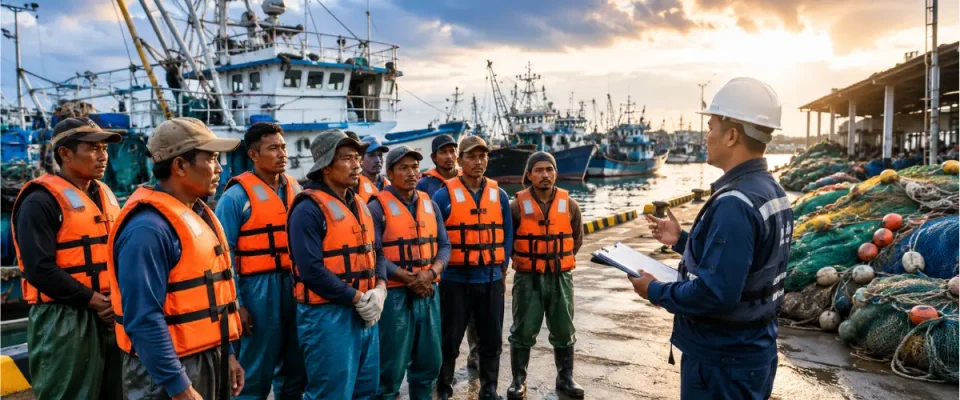
Ratification of ILO Convention 188 introduces stronger safety, welfare and labour standards for the country’s fishing workforce
Indonesia has taken a major step towards improving the welfare and working conditions of fishing crews by strengthening protections under the International Labour Organization (ILO) Convention No. 188 on Work in Fishing. The move aims to establish better safety standards, clearer employment rights, and improved social protection for workers in the fisheries sector.
The new framework is expected to benefit thousands of fishing vessel workers by addressing key concerns related to workplace safety, employment agreements, health protection, and living conditions at sea. Fishing is recognised as one of the world’s most challenging occupations, with workers often exposed to harsh weather conditions and operational risks.
Indonesia’s ratification of ILO Convention No. 188 reflects the country’s commitment to aligning its fisheries sector with international labour standards. The regulation covers areas such as recruitment processes, working conditions, occupational safety, medical care, and minimum requirements for accommodation and food provisions on fishing vessels.
The initiative is also expected to support the development of a more sustainable and responsible fisheries industry. By improving labour standards and worker protection, Indonesia aims to strengthen confidence across the seafood supply chain while promoting fair practices within the maritime sector.
Government officials highlighted that protecting fishing crews is an important part of strengthening the country’s blue economy. The implementation of these standards will require cooperation between government agencies, fishing companies, vessel operators, and industry stakeholders to ensure effective enforcement.
As one of the world’s major maritime nations, Indonesia’s move is expected to influence labour practices across the fisheries sector and encourage greater focus on worker welfare, responsible fishing operations, and sustainable seafood production.