

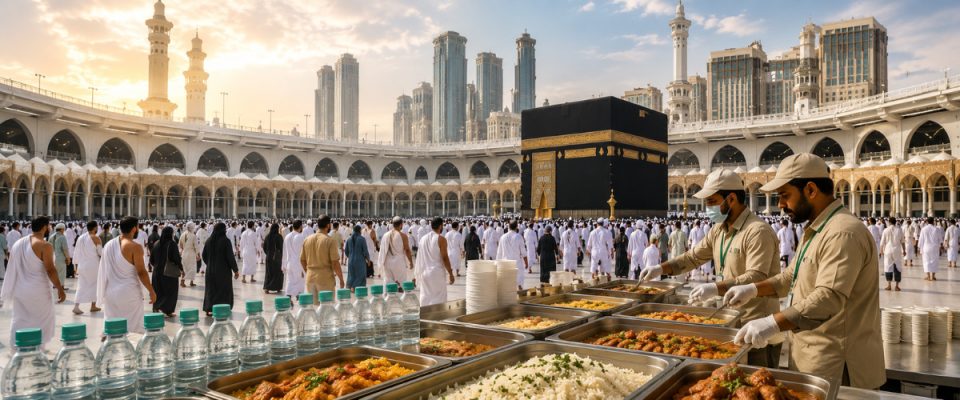
Saudi Arabia’s food and beverage sector is witnessing strong growth as the annual Hajj pilgrimage continues to boost demand for meals, catering services, and food supplies across the kingdom.
The seasonal influx of millions of pilgrims has created significant business opportunities for food producers, retailers, and hospitality operators.
According to reports citing data from the Saudi Central Bank, food and beverage transactions reached nearly 3.7 billion Saudi riyals (around $986 million) in a single week ahead of the Hajj season, reflecting the scale of spending linked to pilgrim services. Industry segments connected to food preparation and catering have also recorded rapid annual growth, with some areas expanding by as much as 54 percent.
To manage the growing demand during the pilgrimage, major retailers and food service providers are operating extended-hour stores and strengthening cold-chain logistics to ensure continuous supply of ready-to-eat meals, bottled water, and essential food items for pilgrims in Makkah and surrounding holy sites.
Saudi authorities are also accelerating digital transformation within the sector through expanded electronic invoicing regulations for businesses, a move expected to improve efficiency and transparency while encouraging more small and medium enterprises to participate in the Hajj supply chain. Analysts believe local businesses and family-run food producers can benefit from the seasonal surge by offering traditional meals and faster delivery services near pilgrim accommodation zones.
Economists describe the growing “pilgrim meals economy” as part of Saudi Arabia’s broader event-driven economic strategy under Vision 2030, which aims to diversify the kingdom’s economy beyond oil. The Hajj season not only supports large corporations but also creates seasonal employment and income opportunities for local entrepreneurs, transport providers, and food vendors.