

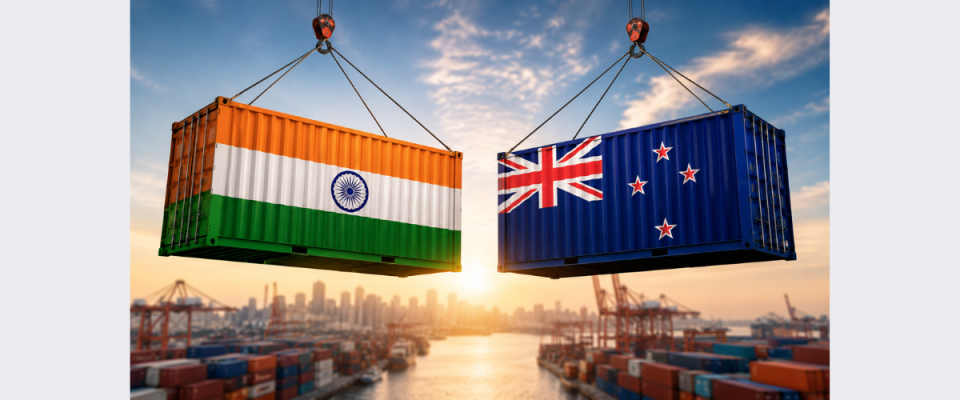
New trade agreement strengthens bilateral economic ties, expands market access, and opens new opportunities for food, agriculture, and manufacturing sectors.
India and New Zealand are set to deepen their economic partnership through a landmark Free Trade Agreement (FTA) that will allow 57% of New Zealand’s exports to enter the Indian market tariff-free from the first day of implementation. The announcement was made by New Zealand Prime Minister Christopher Luxon, who described the agreement as a major milestone for businesses in both countries.
The agreement is expected to significantly improve market access for New Zealand exporters while strengthening bilateral trade and investment. Prime Minister Luxon said the FTA would create new opportunities across a range of industries, enabling New Zealand businesses to benefit from greater access to one of the world’s fastest-growing major economies.
For the food and agriculture sector, the agreement is expected to enhance trade in products such as kiwifruit, apples, meat, wool, forestry products, and other agricultural commodities. While many products will receive immediate tariff concessions, sensitive dairy categories will continue to have limited or phased market access under the negotiated framework.
The FTA also provides significant benefits for Indian exporters. New Zealand is expected to eliminate tariffs on a broad range of Indian products, including textiles, apparel, leather goods, footwear, marine products, engineering goods, gems and jewellery, and handicrafts, creating new opportunities for Indian manufacturers and exporters.
The announcement comes ahead of Prime Minister Narendra Modi’s official visit to New Zealand, during which both countries are expected to discuss trade, investment, commerce, technology, and strategic cooperation. The visit highlights the growing importance of India-New Zealand relations and reflects both nations’ commitment to expanding economic engagement.
Business leaders believe the agreement will encourage greater cross-border investment, improve supply chain integration, and support long-term growth in sectors such as food processing, agriculture, manufacturing, logistics, and services. The FTA is also expected to enhance collaboration in innovation, sustainability, and technology-driven industries.
The India-New Zealand FTA represents a significant step toward strengthening bilateral trade relations by reducing tariff barriers, improving market access, and fostering economic cooperation. Once implemented, the agreement is expected to boost trade volumes, create new business opportunities, and reinforce the strategic partnership between the two countries.