

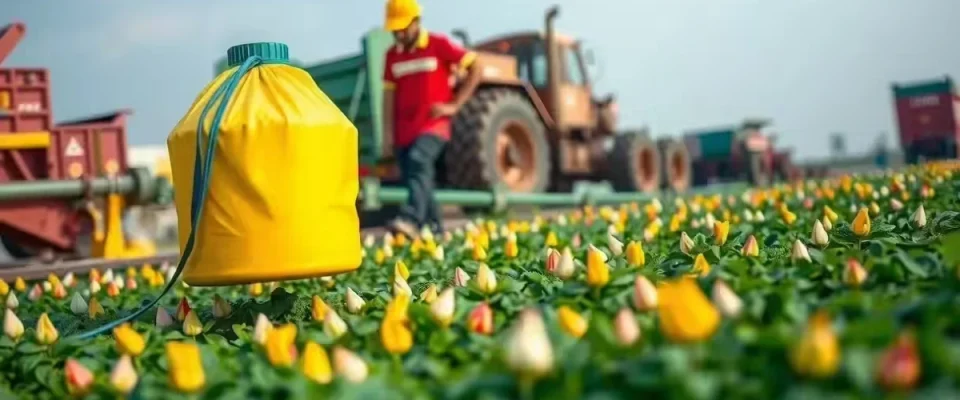
The European Commission has introduced a new Fertiliser Action Plan aimed at supporting farmers affected by rising fertiliser prices and supply shortages, while also strengthening Europe’s domestic fertiliser industry and reducing reliance on imports.
The initiative comes as farmers across Europe continue to face increasing costs and supply uncertainties caused by global market volatility and disruptions in fertiliser availability. The plan combines short-term support measures with long-term strategies designed to improve supply security, expand local production capacity, and accelerate the transition towards sustainable and low-carbon fertiliser alternatives.
European Commission Executive Vice-President Raffaele Fitto said the agricultural sector is facing major challenges due to unstable international markets and rising production costs. He noted that the Action Plan is intended to provide immediate assistance to farmers while also improving the long-term resilience and competitiveness of European agriculture.
As part of the package, the Commission plans to provide targeted financial support to farmers dealing with high fertiliser expenses through existing agricultural policy instruments. The EU is also considering increasing funding for the agricultural reserve and introducing a financial package before summer to improve liquidity for farmers ahead of the next production cycle.
The proposed measures include new liquidity support schemes, greater flexibility in advance payments, and incentives for farming practices that improve nutrient efficiency, reduce fertiliser consumption, and encourage the use of bio-based alternatives. Additional focus will be placed on strengthening Farm Advisory Services and promoting better nutrient management across the agricultural sector.
To support circular economy goals and reduce carbon emissions, the EU plans to strengthen its domestic fertiliser production sector and encourage wider adoption of organic and bio-based fertilisers. The Commission also highlighted the potential of alternatives such as algae biomass, microbial solutions, biostimulants, and the recovery of nitrogen and phosphorus from sewage sludge.
The Action Plan further aims to ensure the fertiliser sector has access to funding for green innovation and modernisation projects. Existing EU funds may also support investments in biogas, biomethane, wastewater infrastructure, and nutrient recovery technologies.
To improve transparency and supply chain coordination, the Commission will establish an EU Fertilisers Value Chain Partnership involving fertiliser producers, farmers, and Member States. The partnership will focus on strengthening food security, improving affordability, and addressing supply challenges across the EU.
In addition, the Commission plans to enhance market monitoring systems, improve early-warning mechanisms, and introduce a framework for providing regular and updated fertiliser market data across Europe.