

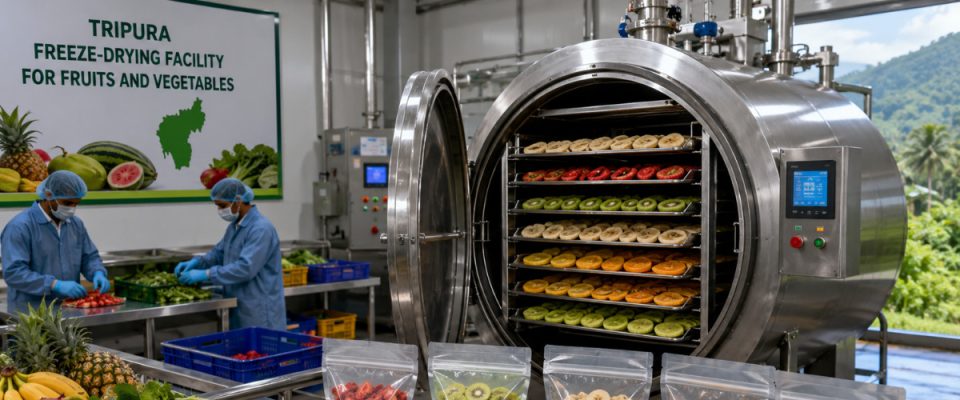
ASMS and the Tripura Government partner to establish a modern freeze-drying plant, enhancing food processing, reducing post-harvest losses, and creating new export opportunities for farmers.
The Government of Tripura has partnered with ASMS to establish a state-of-the-art freeze-drying facility for fruits and vegetables, marking a significant step toward strengthening the state’s food processing ecosystem. The project aims to reduce post-harvest losses, increase value addition, and create new domestic and export market opportunities for horticultural produce.
The proposed facility will use freeze-drying technology, which removes moisture from fruits and vegetables while preserving their nutritional value, flavour, colour, and texture. The process significantly extends shelf life without the need for artificial preservatives, making products suitable for premium retail, foodservice, and export markets.
Tripura produces a wide variety of horticultural crops, including pineapple, jackfruit, mango, litchi, banana, ginger, turmeric, and seasonal vegetables. The new processing infrastructure is expected to help farmers convert fresh produce into high-value freeze-dried products, reducing wastage during peak harvest seasons while improving farm incomes.
The initiative is also expected to strengthen the state’s food processing industry by encouraging investment in value-added food products. Freeze-dried ingredients are increasingly used in ready-to-eat meals, snacks, beverages, bakery products, dairy applications, health foods, and nutraceuticals, creating new business opportunities for food manufacturers.
Officials believe the facility will improve Tripura’s agro-processing capabilities, strengthen supply chains, and enhance the competitiveness of locally grown produce in both domestic and international markets. Better preservation technology will also enable year-round availability of seasonal fruits and vegetables.
The collaboration reflects Tripura’s continued focus on modern food processing infrastructure and agricultural value addition. By introducing advanced freeze-drying technology, the project is expected to support farmers, reduce food waste, generate rural employment, and position the state as an emerging hub for premium processed fruit and vegetable exports.