

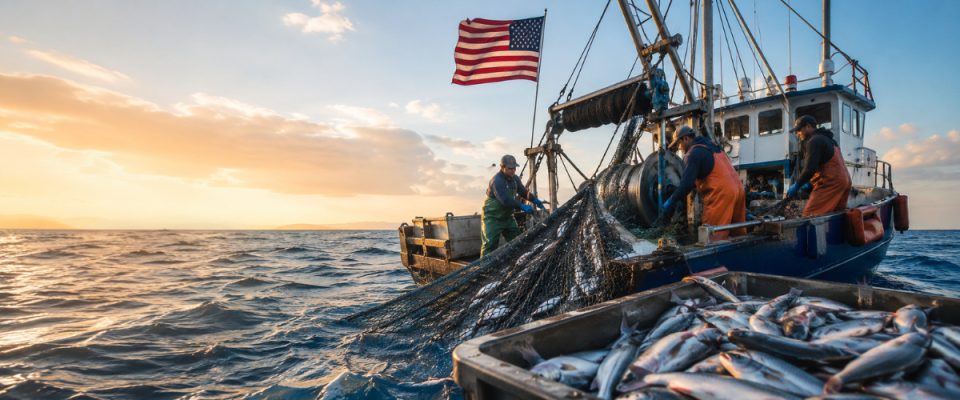
Trump administration announces regulatory reforms, including plans to reopen key scallop fishing grounds and strengthen America’s seafood production.
The Trump administration has announced a series of measures aimed at reducing regulatory burdens on the U.S. commercial fishing industry, as part of a broader strategy to increase domestic seafood production and strengthen the competitiveness of American fishermen. The reforms include plans to reopen portions of the northern Georges Bank off the New England coast to scallop fishing, an area that has remained closed for decades due to conservation measures.
The announcement followed a meeting at the White House between President Donald Trump and representatives of the scallop fishing industry. White House trade and manufacturing adviser Peter Navarro said the administration intends to modernize fisheries management while ensuring that conservation principles continue to guide the implementation of new policies.
According to the administration, the initiative is part of a wider effort to revitalize the U.S. seafood sector by reducing unnecessary regulations, improving access to commercially important fishing grounds, and enhancing opportunities for domestic seafood producers. Officials said the regulatory review will extend across fisheries on the Atlantic, Gulf, and Pacific coasts.
One of the key proposals involves reopening the northern edge of Georges Bank for scallop harvesting. The area was closed in 1994 to protect fish stocks and promote the recovery of marine ecosystems. While industry representatives have welcomed the proposal, fisheries managers and marine scientists have previously expressed concerns about reopening the region because it also serves as an important spawning ground for Atlantic cod and other commercially valuable species.
The U.S. commercial fishing industry, valued at approximately US$320 billion, is regulated by the National Oceanic and Atmospheric Administration (NOAA) through the National Marine Fisheries Service, which establishes fishing quotas, seasonal limits, and management plans in consultation with regional fisheries councils. Any regulatory changes are expected to follow established scientific review and stakeholder consultation processes.
The latest measures build on an executive order issued in 2025 that directed the Department of Commerce to reduce regulatory barriers, expand domestic seafood production, and review restrictions affecting commercial fishing activities. The administration has argued that increasing domestic harvests could help reduce the country’s heavy reliance on imported seafood while supporting coastal economies and creating new opportunities for U.S. fishermen.
Industry stakeholders have largely welcomed the government’s efforts to improve market access and reduce regulatory complexity. However, environmental organizations and fisheries experts have emphasized that any expansion of fishing activities should be supported by scientific assessments to ensure the long-term sustainability of marine resources. As the regulatory review progresses, balancing economic growth with responsible fisheries management is expected to remain a key priority.