

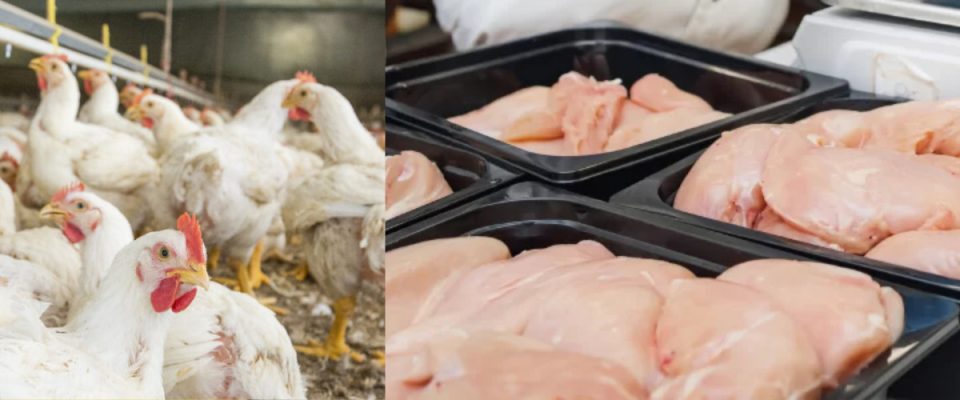
Spain’s poultry sector is expected to increase chicken production in 2027 as positive margins, steady domestic demand and competitive pricing support industry expansion.
Spain’s chicken meat industry is expected to expand in 2027, supported by favourable production margins, stable domestic demand and competitive pricing in European and international markets, according to a USDA Foreign Agricultural Service report cited by The Poultry Site. Spain is the European Union’s second-largest chicken meat producer.
Spanish chicken prices have increased faster than feed costs, improving feeding margins for producers. This economic environment is encouraging poultry companies to expand production and invest in their operations as demand for chicken remains steady in the domestic market.
The Spanish poultry industry is also experiencing continued consolidation. Domestic and international companies are expanding their positions through acquisitions of poultry farms and processing businesses, creating larger integrated operations across the production chain.
Ukrainian poultry group MHP, which has held a majority stake in Uvesa since spring 2025, agreed in June 2026 to acquire Payán Hermanos, a poultry company based in Granada. The acquisition is expected to further expand MHP’s presence in Spain’s poultry and meat sector.
Dutch poultry group Plukon is also strengthening its Spanish operations. In May 2026, the company agreed to acquire Avimosa, an integrated poultry business operating across Madrid and Toledo. Avimosa’s activities include feed production, hatching, farming and meat processing.
These investments are adding to the structural changes taking place within Spain’s poultry sector. Larger companies are increasing their presence across multiple stages of production, from feed and breeding to farming and processing.
Animal health conditions are another factor influencing the production outlook. Spain has remained free from highly pathogenic avian influenza (HPAI) since February 2026, although several Newcastle disease outbreaks have occurred, leading to vaccination programmes in affected regions.
The combination of favourable margins, domestic consumption and competitive market conditions provides a supportive environment for Spanish poultry producers heading into 2027. At the same time, consolidation is reshaping the industry’s ownership and production structure.
The expected increase in chicken production also reflects the broader role of poultry in Europe’s meat sector. As producers seek to manage feed costs, improve efficiency and respond to consumer demand, investment in integrated production and processing capacity is becoming an important part of the industry’s development.
For Spain’s poultry and food industries, the 2027 outlook therefore points toward further production growth alongside continued investment and consolidation across the supply chain.