

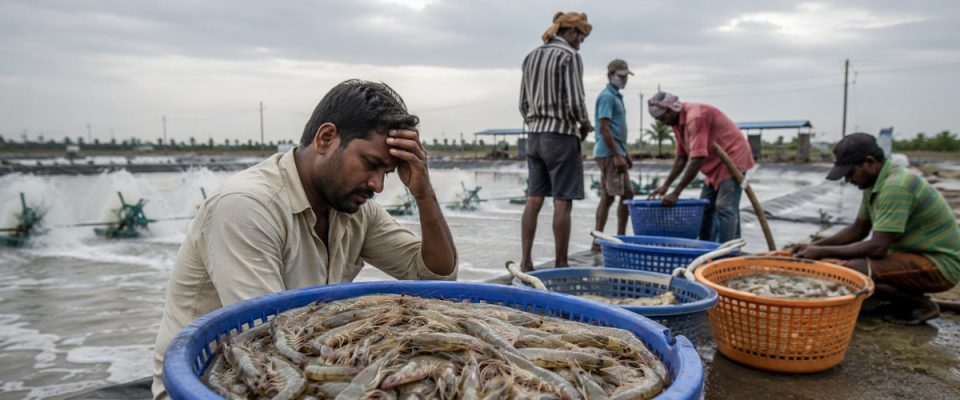
Producers announce a one-day harvest halt to protest declining farm-gate prices, rising production costs, and challenges impacting India’s shrimp aquaculture sector.
Shrimp farmers across Andhra Pradesh have announced a one-day suspension of shrimp harvesting on 30 June in a coordinated protest against the prolonged decline in farm-gate shrimp prices and mounting production costs. The move reflects growing concerns within India’s aquaculture sector, where producers say shrinking profit margins are threatening the sustainability of shrimp farming operations.
The protest has been organized by shrimp farmers’ associations to draw the attention of the government and industry stakeholders to the economic challenges facing aquaculture producers. Farmers argue that the prices they receive for harvested shrimp have fallen sharply, while the costs of feed, seed, electricity, labour, and pond management continue to rise, making shrimp cultivation increasingly unviable.
Andhra Pradesh is India’s largest producer of farmed shrimp and plays a crucial role in the country’s seafood exports. The state contributes a significant share of India’s shrimp production, supplying major international markets including the United States, Europe, China, and Japan. Any disruption in harvesting activity has the potential to affect seafood processors, exporters, and the wider supply chain.
According to industry representatives, the one-day harvest halt is intended as a symbolic demonstration rather than a prolonged strike. Farmers hope the action will encourage discussions on measures to stabilize shrimp prices, improve market transparency, and provide policy support for the aquaculture sector.
Producers are also seeking greater intervention to address issues such as volatile export demand, fluctuating international prices, disease management, and rising input costs. They believe stronger support mechanisms are needed to protect farmer incomes while maintaining India’s competitiveness in the global shrimp market.
Industry experts note that India’s shrimp sector has faced increasing pressure in recent years due to weaker demand in some export markets, higher production expenses, and global price fluctuations. These factors have reduced profitability for many farmers despite the country’s continued position as one of the world’s leading exporters of farmed shrimp.
Seafood processors and exporters are closely monitoring the situation, although a one-day suspension is not expected to significantly disrupt export commitments. However, the protest highlights broader concerns about the financial health of shrimp farming and the need for long-term measures to ensure the industry’s sustainable growth.
As stakeholders engage with policymakers and industry bodies, shrimp farmers are calling for collaborative solutions that balance producer welfare, export competitiveness, and the continued development of India’s aquaculture industry. The planned harvest suspension serves as a reminder of the economic challenges confronting one of the country’s most important seafood export sectors.