

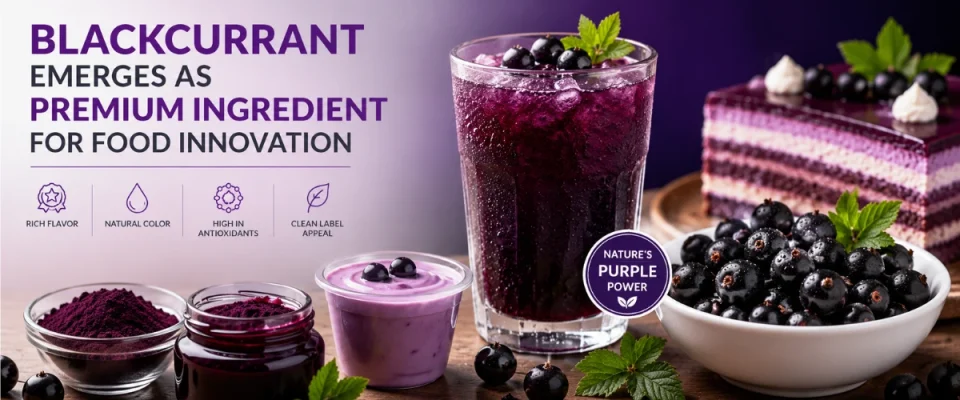
Bold flavor, natural purple color and clean-label appeal are driving blackcurrant use across beverages, confectionery, dairy and functional foods.
Blackcurrant is gaining attention as a premium food ingredient, with its distinctive flavor, vibrant natural color and clean-label credentials creating new opportunities for food and beverage manufacturers. Although it remains a niche berry compared with strawberry and raspberry, its ability to deliver multiple product benefits is increasing its appeal.
According to Innova Market Insights, blackcurrant ingredient use in global food and beverage launches recorded a 6% CAGR between July 2021 and June 2026. Confectionery accounted for the largest share of launches at 35%, while dairy and snacks recorded the fastest growth, each posting an 11% CAGR.
The ingredient is moving beyond traditional juices and preserves into functional beverages, children’s snacks, wellness confectionery and dairy products. Recent applications include blackcurrant-based protein water, fruit snacks and vitamin-fortified vegan gummies.
One of blackcurrant’s biggest advantages is its bold, tangy and complex flavor profile. Manufacturers can use it as a standalone fruit flavor or combine it with apple, citrus, botanicals and other berries to add depth and create more distinctive formulations.
Blackcurrant also provides a naturally intense purple color, derived from anthocyanins. This gives manufacturers an opportunity to combine flavor and color from a naturally derived ingredient, supporting the growing consumer preference for recognizable ingredients and clean-label products.
Beverages and confectionery remain important application areas, while opportunities are expanding into functional drinks, sports and energy beverages, ice cream, desserts, jams and dairy-based drinks. Its strong flavor and natural color make it particularly suitable for products positioned around premium quality and wellness.
However, manufacturers must consider acidity, color stability and sensory intensity during formulation. Anthocyanin-based color can be affected by pH, processing and storage conditions, while blackcurrant’s strong flavor can overpower more delicate fruit notes.
Supply consistency is another consideration. Seasonal variations, including weather-related impacts on blackcurrant harvests in Poland, can affect availability and create challenges for manufacturers seeking reliable ingredient supplies.
With its combination of flavor, natural color, premium positioning and clean-label appeal, blackcurrant is emerging as a valuable ingredient for food product differentiation. Rather than becoming a mainstream berry flavor, its strongest opportunity may lie in helping manufacturers develop distinctive and premium food and beverage products.